


No products in the cart.


Compound vs Isolation Exercise
conditioning | May 20, 2025
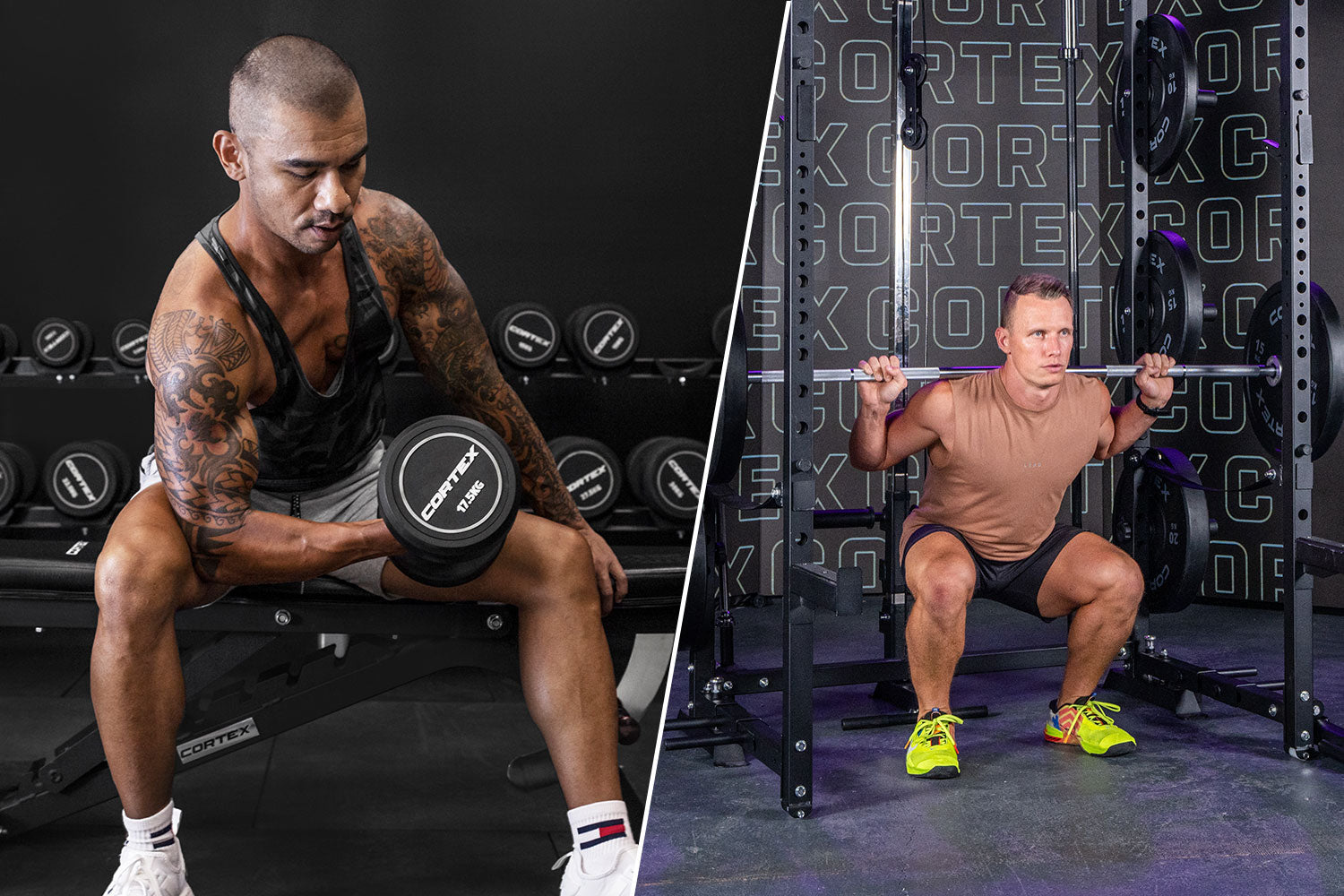
When you first start lifting weights, most people are generally happy to do whatever exercises take their fancy or whatever seems achievable. But there comes a point where you need to get a bit more specific and intentional with your training, especially if you’re looking to put together a home gym. The first step on this journey is to wrap your head around the two main categories of muscle-building exercises: compound and isolation exercises. Understanding compound vs isolation training when building muscle will help you make better decisions about your fitness routine and about which strength equipment to buy.
What Are Isolation Exercises?
First up: isolation exercises. These are workouts that target a specific muscle group, usually involving just one joint at a time. By isolating and engaging that muscle fully, it allows you to better focus your intention on individual parts of the body. It’s especially useful for smaller muscle groups that tend to get ignored or for evening out muscle imbalances.
Prone Hamstring Curl (hamstrings)

The prone hamstring curl is an exercise that isolates the hamstrings, the muscles at the back of the thigh. It’s also good if you’re looking for isolated exercises for glutes.
How it's done:- Lie face down on the leg curl machine, with your knees aligned at the edge of the bench.
- Place your feet under the pad (just above your heels) so that your legs are straight.
- Hold onto the bench and engage your core.
- Slowly bend your knees to bring your feet towards your glutes, flexing the hamstrings as you curl the weight.
- Pause at the top for a moment, then slowly return to the starting position with control.
Tip:Focus on using your hamstrings to move the weight, not your lower back or hips.
Seated Leg Extension (quadriceps)

The seated leg extension isolates the quadriceps, the large muscle group at the front of the thigh. It can be done on the same machine as the prone leg curl but facing the other way.
How it's done:- Sit on the leg extension machine with your knees bent at a 90-degree angle, feet flat on the floor.
- Adjust the pad so that it rests just above your ankles.
- Engage your core.
- Extend your legs out straight by contracting your quadriceps, pushing the pad away from your body.
- Pause at the top for a moment, then slowly lower the weight back to the starting position.
Tip: Keep the movement controlled and avoid jerking the weight for proper muscle engagement.
Lateral Shoulder Raise (shoulders)

The lateral shoulder raise targets the lateral deltoids to build broad, defined shoulders.
How it's done:- Stand with a dumbbell in each hand at your sides, feet shoulder-width apart.
- Keep a slight bend in your elbows and engage your core.
- Raise your arms out to the sides until they reach shoulder height, with your palms facing down.
- Slowly lower the dumbbells back to the starting position, maintaining control throughout the movement.
Tip: Avoid swinging the weights. Focus on lifting with your shoulders, not your traps.
Cable Chest Fly (chest)

The cable chest fly targets the chest muscles, particularly the pectoralis major. For this exercise, you’ll need a cable crossover.
How it's done:- Set the cable pulleys to chest height and attach the handles.
- Stand in the centre of the machine with a handle in each hand, arms extended in front of you.
- With a slight bend in your elbows, slowly pull the cables outward until your arms are almost fully extended to the sides of your body.
- Bring your arms back together, squeezing your chest at the top, then slowly return to the starting position.
Tip: Keep the movement slow and controlled, focusing on your chest muscles to bring the cables together.
Barbell Bicep Curl (biceps)
The barbell bicep curl is a classic isolation exercise that targets the biceps, the muscles at the front of your upper arm. It's a fundamental movement for building arm strength and definition.
How it's done:- Stand upright with your feet shoulder-width apart, holding a barbell with palms facing forward.
- Keep your elbows close to your torso and your back straight.
- Curl the barbell upwards toward your chest by flexing your elbows, keeping your upper arms stationary.
- Squeeze your biceps at the top, then slowly lower the barbell back to the starting position.
Tips:Avoid swinging your body or using momentum to lift the barbell. Keep the movement strict for maximum muscle engagement.
Click here to shop barbells and weight plates.
Benefits and Drawbacks of Isolation Exercise
Benefits
Hypertrophy-Specific TrainingIsolation exercises are excellent for hypertrophy, or muscle growth. Focusing on individual muscles will exhaust them completely, stimulating muscle fibres to grow.
Target Individual Muscle Groups EffectivelyIsolation exercises focus on one muscle at a time for a more precise muscle activation. This allows you to craft your workout routine with laser focus, building each muscle group separately to create the most evenly balancing muscle growth.
Working on Muscular ImbalancesIt’s often the case that different parts of the body are stronger than others. Isolation exercises work to smooth out these imbalances.
Recovering from InjuryBy isolating the affected muscle, you can perform exercises that strengthen it without putting unnecessary stress on the surrounding muscles or joints. This targeted approach helps facilitate a safe rehabilitation routine.
Drawbacks
Building Less Overall StrengthWhile isolation exercises are great at targeting specific muscles, they don’t contribute as much to your overall strength development.
Functional Movement AspectBecause isolation exercises are more specialised, they don’t contribute as much to your functional ability to do everyday tasks. For example, lifting heavy objects from the floor or carrying groceries is better trained by compound exercises like deadlifts or lunges.
What Are Compound Exercises
A compound exercise workout will involve multiple muscle groups and joints. The best compound exercises will mimic real-life movements, which is fundamental for developing your functional fitness. They’re also a more efficient type of exercise, helping you achieve more in less time by targeting groups of muscles collectively rather than one by one.
Deadlift
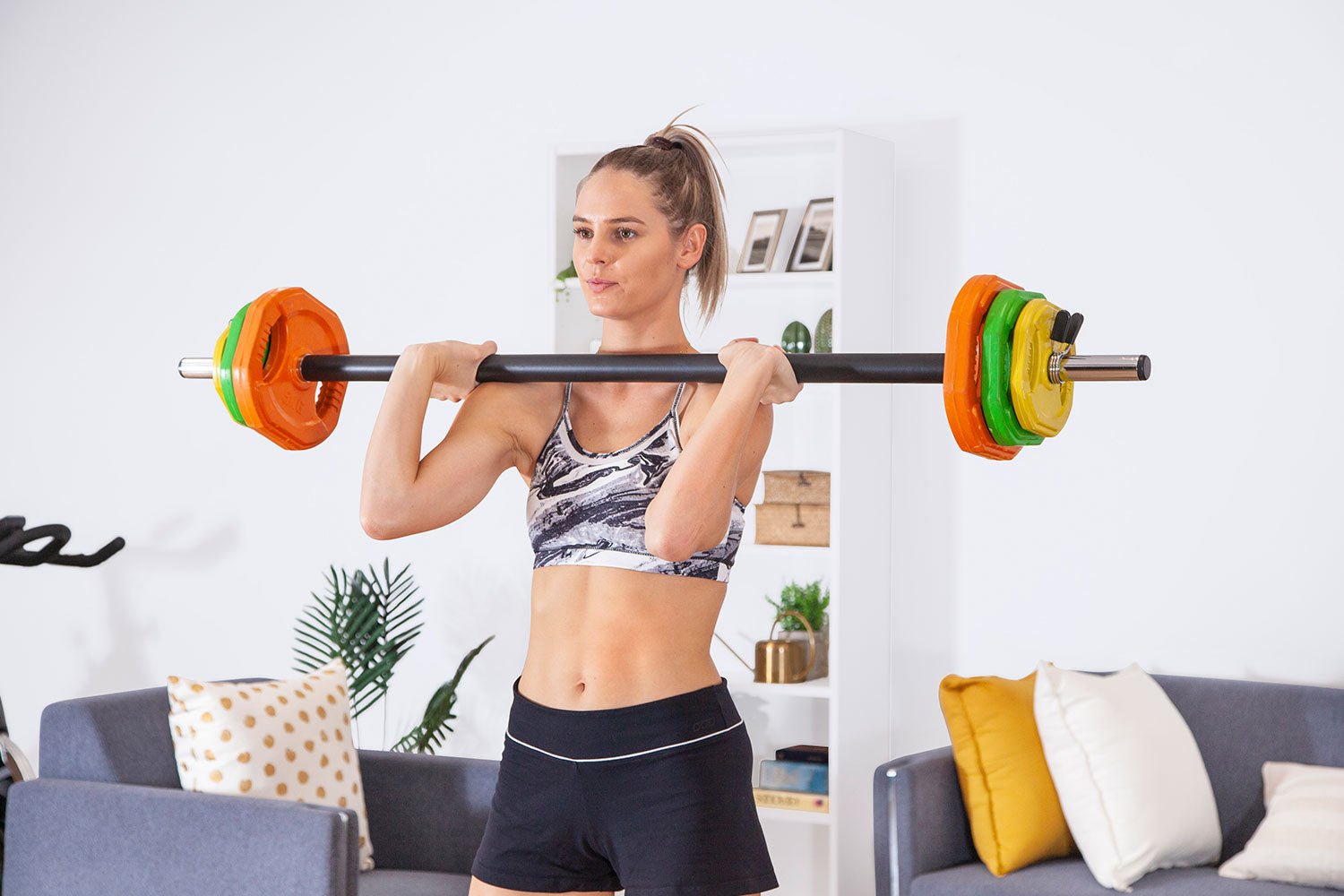
The deadlift is a classic compound exercise that targets the lower back, glutes, hamstrings and core.
How it's done:- Stand with your feet hip-width apart, with a barbell in front of you.
- Bend at your hips and knees, grip the barbell with both hands and make sure your back is straight.
- Engage your core, pull your shoulders back and lift the bar by driving through your heels.
- Keep the bar close to your body as you stand up, extending your hips and knees simultaneously.
- Reverse the movement to lower the bar back to the ground with control, maintaining a neutral spine.
Tips: Make sure to avoid rounding your back during the lift. Focus on keeping your chest up and your back straight.
Back Squat

The back squat is a compound leg exercise that targets the quads, hamstrings, glutes and lower back, also making it a great compound exercise for the back.
How it's done:- Place a barbell across behind your neck, just resting on the top of your shoulders. Grip it tightly with your hands.
- Stand with your feet shoulder-width apart, toes slightly turned out.
- Keep your chest up and your back straight as you lower your body by bending your knees and hips.
- Squat down until your thighs are parallel to the floor, or deeper if possible.
- Drive through your heels to stand back up, extending your knees and hips simultaneously.
Tip: Keep your knees tracking over your toes and avoid letting them cave inward. Maintain a neutral spine throughout the movement.
Front Squat

The front squat is similar to the back squat but the barbell is held across the front of your shoulders. This variation places more emphasis on the quads and upper back.
How it's done:- Position the barbell across the front of your shoulders, resting just above your collarbone.
- Grip the barbell with your hands slightly wider than shoulder-width, with your elbows high and facing forward.
- Stand with your feet shoulder-width apart, keeping your chest up and back straight.
- Lower your body into a squat by bending your knees and hips, making sure your chest stays lifted and your elbows stay high.
- Once your thighs are parallel to the ground, push through your heels to return to a standing position.
Tips: Keep your elbows high throughout the movement to prevent the barbell from rolling forward. Try to maintain a vertical torso to reduce strain on the lower back.
Bench Press

The bench press is a classic upper-body compound exercise that targets the chest, shoulders and triceps.
How it's done:- Lie flat on a bench, gripping the barbell slightly wider than shoulder-width apart.
- Keep your feet flat on the floor and your back arched slightly.
- Lower the barbell slowly towards your chest, keeping your elbows at a 45-degree angle.
- Press the barbell back up to the starting position, fully extending your arms.
Tips: Avoid letting the bar bounce off your chest. Keep your movements controlled and focus on using your chest and triceps to lift the weight.
Push Press
The push press is a dynamic compound exercise that targets the shoulders, triceps and core, while also involving the legs for a more powerful movement. It's an explosive exercise that’s a great compound shoulder exercise.
How it's done:- Start by standing with your feet shoulder-width apart, holding a barbell at shoulder height with a grip slightly wider than shoulder-width.
- Slightly bend your knees, then explosively drive through your legs to help push the barbell overhead.
- As the bar passes your head, lock out your elbows, extending your arms fully.
- Slowly lower the barbell back to the starting position and repeat.
Tips: Focus on using your legs to help generate the power to lift the barbell overhead. Engage your core to maintain stability and control throughout the movement.
Benefits and Drawbacks of Compound Exercises
Benefits
Improve Strength Through Functional, Real-Life MovementsCompound exercises mimic real-life movements, engaging multiple joints and muscles. This makes them perfect for improving functional strength that translates directly into daily activities and sports.
Time-Efficient TrainingSince compound exercises work several muscle groups at once, they allow you to get a full-body workout in less time compared to isolation exercises.
Coordination, Flexibility and MobilityCompound exercises improve your overall coordination, flexibility and mobility. For example, squats not only build lower-body strength but also increase your range of motion and flexibility, particularly in your hips, knees and ankles.
Burns More CaloriesBecause compound exercises require the use of large muscle groups and engage multiple muscles, they tend to burn more calories than isolation exercises. Movements like the deadlift and squat elevate your heart rate and engage your core, burning more energy during the workout.
Drawbacks
By exercising a group of muscles collectively, individual muscles won’t be worked to their maximum. Muscle imbalances will only be exacerbated by continued compound workouts, leading to inefficient disparities in your personal fitness.
Conclusion
Building a routine that includes both compound and isolation exercises will help you achieve well-rounded fitness goals. For more information on the best weight training equipment or home gym essentials, check out the detailed guides available on the best weight training equipment and gym essentials for summer.
By understanding the strengths and weaknesses of compound vs. isolation exercises, you can tailor your workout program to match your fitness goals.
Latest Posts

Cardio | June 22, 2026
EOFY Home Gym Upgrade Guide: Where to Invest in Treadmills, Bikes & Strength EquipmentThe end of financial year is coming up, which we believe is one of the best times to evaluate your long-term fitness...
Read more
Cardio | June 09, 2026
Low-Impact Cardio Machines for Home: Best Options for Joint-Friendly WorkoutsAre you someone who's avoided running because you're worried about your knees? Maybe you've taken a break from cardi...
Read more
gift | May 05, 2026
Mother’s Day Gift Ideas 2026This year, get your Mum a gift that's functional and life-enhancing. If you've got a Mum who likes early morning jog...
Read more
Training | May 01, 2026
Lifespan Fitness Customer Transformations: Bec ChristensenFor most people, a fitness journey starts with a simple goal. For Bec Christensen, her initial drive to get her fitn...
Read more
Exercise | April 24, 2026
How to Stay Consistent with Home Workouts Over Long Weekends & HolidaysMost people will say that they lose motivation over long weekends, but that's rarely the real issue. What actually d...
Read more
Cardio | April 15, 2026
Treadmill vs Exercise Bike vs Cross Trainer: Which Is Best for Your Home?Treadmills. Exercise Bikes. Cross Trainers. These are the big 3 when it comes to home cardio equipment. While most o...
Read more
Treadmill | April 02, 2026
Scott Clark’s 24-Hour Marathon JourneyOn the morning of 15th March, a battered Scotty Clark was lowered into an ice bath, feeling the cool sting calm his ...
Read more
Training | March 10, 2026
Meet the Man Who’s Running for 24-Hours StraightThis former AFL sports trainer is taking ultra-marathons to another level with his 24-hour treadmill challenge.
Read more
Ice baths | February 20, 2026
A Cold Plunge to HealthIn 2002, British long-distance runner Paula Radcliffe won the 10,000m gold medal at the European Athletics Champions...
Read more
Cardio | February 06, 2026
Effects of Exercise on Mental HealthDid you know that regular physical exercise can actually increase the volume of parts of your brain? Namely, the par...
Read more
Cardio | January 12, 2026
Belt Slipping: Cause and CureBelt slipping is what happens when the belt moves out of sync with the treadmill motor and rollers. This can happen ...
Read more
gift | December 19, 2025
Christmas Gifts for Gym Lovers: The Ultimate Holiday Fitness Gift GuideDo you have someone in your life who's a meal-prepping, gym-obsessed, endorphin-chasing fitness junkie? Then you hav...
Read more
Cardio | December 08, 2025
12 Days of Christmas Fitness: Unwrap Your Best Self with These Holiday WorkoutsThe 12 Days of Christmas Fitness is a simple, engaging way to stay motivated during the holidays. Each day introduce...
Read more
November 06, 2025
Your Questions Answered: Our Most Common Service & Product QueriesEvery day, we hear so many interesting and unexpected questions from customers in-store, online and over the phone. ...
Read more
November 05, 2025
Kettlebells vs Dumbbells - Which is Best for You?They may look the same (and have very similar names), but dumbbells and kettlebells can create very different workou...
Read more
October 20, 2025
The Different Types of Weight Plate (and How to Tell them Apart)If you're at all serious about building a solid home fitness setup, you can't skip on weight plates. They have a spe...
Read more
Exercise | October 02, 2025
Gym Rubber Flooring: How Good Is It for Home GymsTo build the home gym of your dreams, you've got to start from the ground up. Gym flooring often gets overlooked, as...
Read more
Treadmill | September 22, 2025
Lifespan Fitness WalkingPad M2 Featured on SunriseOur WalkingPad M2 treadmill was recently featured on Sunrise, where wellness expert Lizzie Williamson showed just h...
Read more
pilates | September 12, 2025
Lifespan Fitness Contour Pilates Reformers Featured on The BlockWeek 6 of The Block saw police-officer duo Britt & Taz take a bold leap: transforming their rumpus room into a P...
Read more
pilates | September 05, 2025
The Ultimate Guide to Reformer PilatesYou’ve probably heard all the buzz around Reformer Pilates. Post-COVID has seen a huge surge in interest in this near...
Read more
Subscribe to our Newsletter
Join our subscribers list to get the latest news, updates and special offers delivered directly in your inbox.
Connect with us



